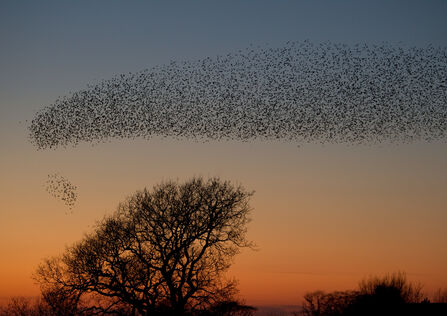
Starling murmurations

Starling murmurations

© Danny Green/2020VISION

Find out more about starling murmurations, one of the most remarkable natural spectacles in the UK.

What is a starling murmuration?

A starling murmuration is essentially a flock of flying starlings heading to roost. Witnessing this phenomenon is one of the most remarkable natural spectacles in the UK. 

During the colder months, our starling populations swell with visitors primarily from northern Europe, seeking the relative warmth of our island climate. As dusk arrives, their incredible dance begins as the starlings set off for their communal roost. Flocks arrive from all directions, gathering in the skies above sheltered roosting habitats such as reed beds, woodlands and even human-made structures. 

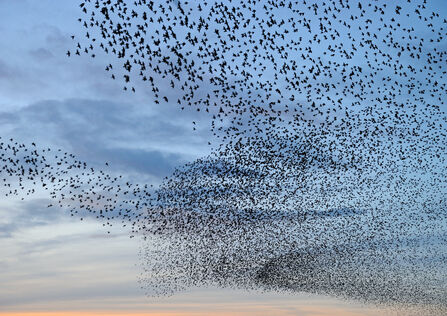
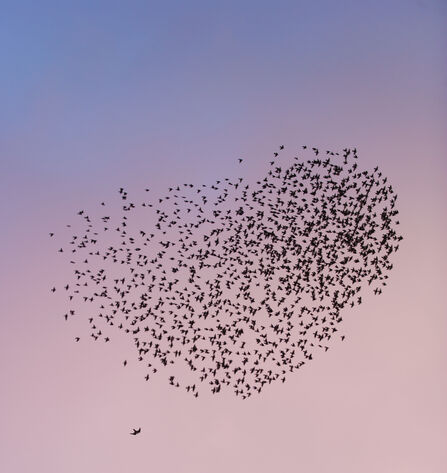
As the numbers reach into the tens and hundreds of thousands, the ‘murmurations’ (the name for a flying flock of starlings) take on incredible shapes in the sky, contracting and expanding as one flock merges into another, and taking on a life of their own; swirling back and forth in ever more complex and beautiful patterns.
Why do starling murmurations form?

Starling murmurations form likely because of safety in numbers. There isn’t actually a definitive explanation for starling murmurations, but one of the main theories is that it’s to protect themselves from predators. 

A starling in a large flock is much less likely to be picked off. Predators such as peregrine falcons will struggle to single out one starling from a whirling group of hundreds or thousands.

As the numbers reach their peak and the sun sets, taking the last of the light, the birds suddenly decide the time is right. They pour down into the reeds in one last swoop before roosting together for the night.

How do they avoid crashing?

Starlings avoid crashing into one another becaise the birds are aware of their neighbours, keeping track of the six or seven that surround them, and how near or far they are. 

A change in one starling’s flight is felt across the whole flock, no matter how big the flock is. They have incredibly fast reactions, meaning they can respond to any changes quickly.

Are starlings under threat?

Starlings are classified in the UK as Red under the Birds of Conservation Concern 5: the Red List for Birds (2021). 

The species has declined by 57% between 1995 and 2023. This could be due to a variety of reasons, including habitat loss, changes in farming practices, low winter survival of young birds and potential disease pressures.

How can I help starlings?

Here are three ways you can help starlings. Starlings are regular garden visitors, so starting in your own outdoor space is an easy way to help them. 

  1. Providing nest boxes is a great place to start, if you have the right space for it. Nest boxes should be placed on the wall under the eaves or on a mature tree, at least 3 metres off the ground. The nest boxes should have a 45mm entrance hole.
  2. Keep a natural grass lawn so starlings can forage for invertebrates.
  3. Provide fresh, clean water in a shallow dish throughout the year. Water can be harder to find during hot weather and winter freezes.

Watch a starling murmuration below