
© Dyane Silvester
©Jon Hawkins Surrey Hills Photography
© Dyane Silvester
© Dyane Silvester
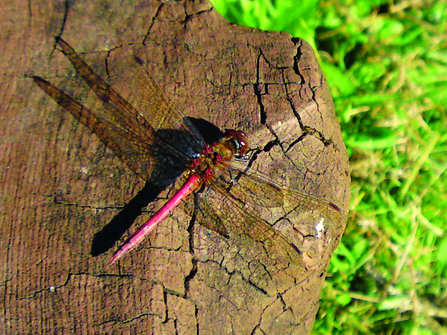
Common darter dragonfly

© Dyane Silvester
© Dyane Silvester
©Jon Hawkins Surrey Hills Photography
© Dyane Silvester
© Dyane Silvester
Common darter dragonfly
Life in my small (and rather scummy) garden pond
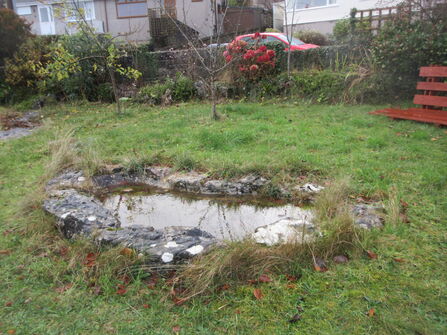
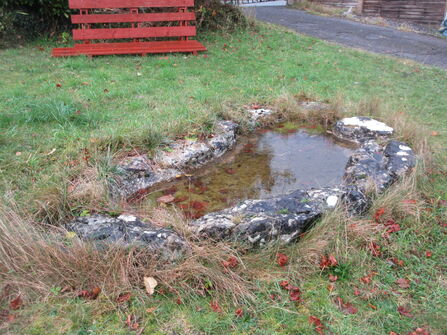
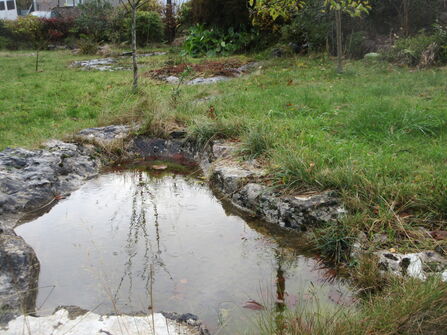
If anyone tells you that a pond needs to be big in order to support wildlife, don't believe them. I used to think that too: the guidance told us that a pond should be somewhere around 6ft across, and 3ft deep – with shallower shelves around the edges, and that the oxygenating weed was so important. So when I moved into a new house and inherited a 5ft x 2ft x 18 inch deep concrete pond, I never thought that it would be anything other than barren.
I did introduce some oxygenating weed – but it died in a slimy mess one desiccated spring, as the water level dropped and I ran out of rainwater to replenish it. So I set about cleaning the pond out.
Imagine my surprise when a handful of rotten leaves and slime from the bottom was wriggling with life: two newts dropped from my hand and swam quickly away, and a couple of scoops later I was holding a small whitish snail – its conical shell so different from the land snails which eat my vegetables.
In summer dragonflies (various darters and emperors), pass through regularly - and this summer I found a discarded skin (exuviae), which I identified as being from the nymph of some species of darter, on a rock next to the pond. There are still no plants in the pond, but clearly these larvae are finding something to cling to, and enough other invertebrates to eat. The dragonflies are still regular visitors so I hope they'll breed here again.
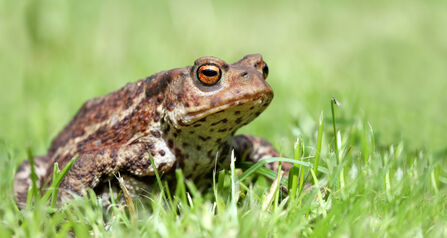
This is the time of year when we think about tidying up in the garden, but it seems that whenever I do so, I meet toads sheltering under leaves and rocks; my guess is that they breed in the pond too: whether successfully, or just adequately to feed the dragonfly larvae, who knows?
Pondskaters and whirligig beetles skim the pond's surface through the summer, and water boatmen (or backswimmers – I'm not sure which) glide beneath them: when I disturb the depths now a scatter of baby ones swim out of the sediment, and quickly back into hiding. Most pond-dwelling invertebrates are predators – so it'll be a constant battle, or balance, of who eats whom! And it seems the lack of plants is less of an issue than I thought.
So if you thought you hadn't space for a garden pond, be assured that you really don't need a huge area. So long as you make sure that any small creatures that fall in can climb out, any size pond is a bonus for wildlife.
Dyane Silvester