Currently Groyne hide is closed for a few weeks because a new hide is being built and expected to open in time for seal pupping season.

Visitors using a wildlife interpretation board at South walney nature reserve, Piel castle in the background © John Morrison
Location
OS Map Reference
OS: 1:50,000. Sheet no. 96Grid reference: SD 215 620
Getting here
By car:
From Barrow-in-Furness follow signs for Walney Island. Cross Jubilee Bridge onto the Island and follow brown signs left at traffic lights. Follow this road for about 1km/0.6 miles then turn left down Carr Lane. Pass Biggar Village and follow the road to the South End Caravan site. Follow the road for a further kilometre until the reserve is reached.
By bicycle:
The reserve is 5km/3 miles from National Route 70 Walney to Wear (W2W) and National Route 700 The Bay Cycleway.
By public transport:
Buses run from Barrow- in-Furness to Biggar.
View on What3Words

Know before you go
Dogs
Assistance dogs only
When to visit
Opening times
South Walney nature reserve is open daily 10am to 5pm (4pm in winter). The reserve gate is closed and locked shortly after closing time. The visitor cabin is open Friday to Monday.Best time to visit
All year roundAbout the reserve
Wildlife highlights
- Grey seals can be seen at high tide all year round. South Walney Nature Reserve is their only haul-out location in Cumbria. Listen to pre-recorded sound of the seals
- Breeding eider duck, great black-backed gull, oystercatcher, ringed plover, shelduck
- Throughout the year look out for barn owls, short-eared owls and peregrines.
- In Spring - the time to see courting eider ducks and catch the returning spring migrants- wheatear, willow warbler and sandwich terns. Thrift and sea campion come into flower.
- In summer - see nesting gulls, eiders, oystercatchers and ringed plovers. Arctic, little and sandwich terns are summer visitors; these agile seabirds can be seen fishing from Sea Hide. Burnet moths and grayling butterflies are on the wing and viper's bugloss, yellow horned poppy and sea lavender are in flower.
- In Autumn - catch the flocks of migratory curlew, spotted redshank, redstart and pink-footed geese.
- In winter - Huge numbers of waders and wildfowl feed and roost around the nature reserve.
- Rabbits are an integral part of the ecosystem at South Walney Nature Reserve and so their presence is actively encouraged. Their grazing and burrowing helps to maintain the sand dunes by keeping vegetation down and keeping the sand moving throughout the system. Without them the sand dunes would risk becoming overgrown and we could lose this valuable habitat. This means that unlike many other places where rabbits are considered a pest, at South Walney Nature Reserve their high numbers are generally positive.
Unfortunately, whenever rabbit populations become very high they're very likely to suffer from an outbreak of myxomatosis. This happens at South Walney Nature Reserve and at every other location in the UK where there are large numbers of rabbits.
Sadly, any efforts to eradicate this disease from the UK’s rabbits has not succeeded, and all that can be done when outbreaks occur is to wait for the outbreak to pass in the knowledge that the rabbit population will be able to recover.
Grey seals at South Walney Nature Reserve
The grey seals can be seen playing in the water at high tide, along with thousands of wintering wildfowl and wader birds, from hides elsewhere on the nature reserve.
Baby seals are incredibly vulnerable to disturbance, which would cause the mother to abandon it and the pup to starve. There is strictly no access to the area of the nature reserve where the seals are located.
What makes South Walney Nature Reserve so special?
From the large number of lesser black-backed and herring gulls that return to set up nest territories in the spring to the multitude of waders in winter, South Walney Nature Reserve is a haven for birds throughout the year.
The mixed herring and lesser black-back gull colony is of national importance. You can also see greater black backed gull, shelduck, mallard, moorhen and coot.
Of the 250 bird species recorded, many are passage migrants on their way to or from breeding grounds. First to arrive in the spring are warblers such as chiffchaff, willow warbler and wheatear, which all over-winter in Africa.
You may also spot more unusual species, which may have been blown off their normal migration route.
When these species leave our shores, autumn brings huge flocks of migratory curlew, redshank, oystercatcher and brent goose, which join the resident birds and the smaller winter visitors such as twite and tree sparrow.
South Walney Nature Reserve is also home to the only grey seal breeding colony in Cumbria, and is one of the southernmost places in Europe to see breeding eider duck.
In winter you can see large numbers of waders and wildfowl feeding and roosting around the nature reserve both on the gravel pools and the intertidal areas.
A working past
South Walney Nature Reserve forms the southern tip of a shingle island lying off the Furness Peninsula.
Although the landscape is constantly changing, due to the prevailing westerly winds and action of the sea, people have utilised this exposed stretch of land for hundreds of years.
During the medieval period it was farmed by the monks of Furness Abbey and during the 19th and 20th centuries salt, sand and gravel were extracted, leaving large lagoons and industrial remains, which influence the wildlife found today.
Plants at South Walney Nature Reserve
Vegetated shingle is an unusual habitat - look out for yellow horned poppy, sea campion and biting stonecrop. In the small areas of surviving dune grassland look out for pyramidal orchid, portland spurge, restharrow and wild pansy.
The old gravel workings have developed their own communities with striking plants such as viper's bugloss, henbane and alkanet. In the saltmarsh in Lighthouse Bay you can find specialists such as as thrift, glasswort and sea purslane.
Recent History
South Walney has been leased from Holker Estates since 1963.
Species
- Grey seal
- Greenshank
- Redshank
- Gatekeeper
- Grayling
- Short-eared owl
- Oystercatcher
- European otter
- Mallard
- Eider
- Great black-backed gull
- Lesser black-backed gull
- Herring gull
- Ringed plover
- Shelduck
- Wheatear
- Arctic tern
- Little tern
- Sandwich tern
- Willow warbler
- Chiffchaff
- Curlew
- Brent goose
- Tree sparrow
- Pyramidal orchid
- Biting stonecrop
- Yellow horned-poppy
- Common restharrow
- Moorhen
- Coot
- Thrift
- Sea campion
- Six-spot burnet moth
- Viper's-bugloss
- Yellow horned-poppy
- Common sea-lavender
- Redstart
- Pink-footed goose
- Barn owl
- Peregrine falcon
- Field pansy
Habitat
Contact us
Environmental designation
A beautiful and charming nature reserve on an island off the Cumbrian coast
Take a virtual tour of South Walney Nature Reserve
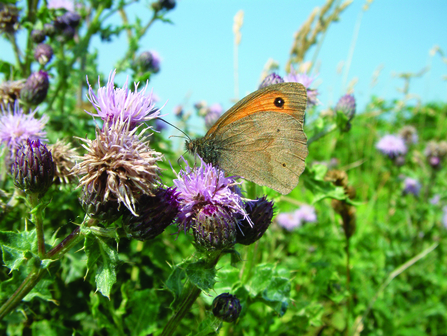
Meadow brown butterfly
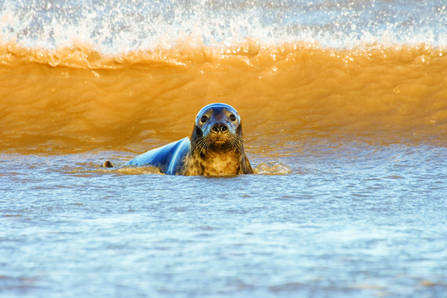
Grey seal © Tom Marshall
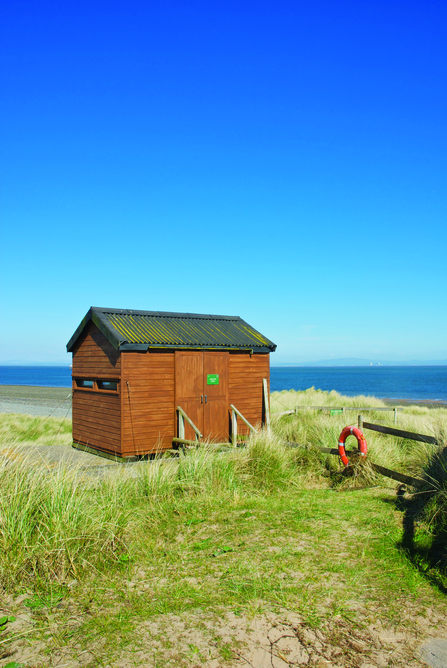
A bird hide at South Walney Nature Reserve © John Morrison

Support our conservation work on this nature reserve,
and protect Cumbria's wildlife & wild places.


Upcoming events at South Walney Nature Reserve
If there are any upcoming events at South Walney Nature Reserve we'll show them to you below.

Download our family story trail and explore South Walney Nature Reserve together:

Please help to protect South Walney Nature Reserve
Further information about South Walney Nature Reserve
Thanks to individuals and funders who made a donation to make this project possible.
Co-op, Tesco Local Community Grants, K2B Keswick to Barrow and:


