Status Site of Special Scientific Interest (SSSI)
National Nature Reserve (NNR)
Access
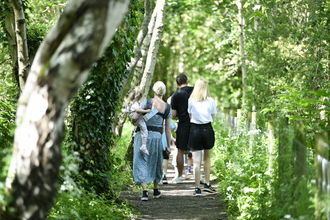
The reserve provides 6km/3.5 miles of level walking. The railway line does not have a consistent surface being grass on some sections and railway ballast/cinder on others. There are ramps at the Smardale Hall and Newbiggin end.
Directions By car From the A685, approximately 4km/2.4 miles north east of Ravenstonedale or 0.75km/1 mile south west of Kirkby Stephen West train station, take the turning signposted Smardale. Ignore the turning to Waitby. Cross over the railway and turn left at the junction. Ignore the sign for Smardale hamlet and cross the disused railway, turn immediately left and then left again for the car park. By bicycle The nature reserve is 2.3km/3 miles from National Route 72 Walney to Wear. By public transport The nearest train station is Kirkby Stephen West. Buses run from Kendal, Sedbergh and Brough to Kirkby Stephen.
Please select a nature reserve from the list below to see more details: Alternatively, you can browse through all the reserves by using this search facility and clicking on one of the links which appear below:
Smardale Gill
What to expect on the nature reserve: habitat, wildlife and more (hover over an icon for more info)
Seasonal highlights on the nature reserve
Spring
Plants: primrose, bluebells, ramsons, may blossom, cow slips, bird’s-eye primrose,
Orchids: early purple, bird’s foot sedge
Summer
Plants: bird’s-eye primrose, horseshoe vetch, common wintergreen, herb paris, alpine bistort, melancholy thistle, bloody cranesbill, rock rose,
Smardale Gill National Nature Reserve occupies a 6km/3.5 mile section of disused railway line which once ran from Tebay to Darlington. At the northern end, the nature reserve includes the steep wooded slopes of the gill carved by Scandal Beck, whilst south of Smardale Gill Viaduct the character of the nature reserve changes and you find yourself in open rolling countryside typical of the area.
What to see
Woodland has probably been present in Smardale Gill since the medieval period and as a result a great diversity of plant species can be found here. Bluebells, primroses, wild garlic and many fern species can be seen in spring on the woodland floor. Many of the trees are multi stemmed, evidence that coppicing has occurred in the past. In summer, bird species include redstart, wood warbler and pied flycatcher whilst buzzard, treecreeper and sparrowhawk may be seen all year round. Non-native tree species, planted in the woodland in the past, are gradually being removed.
The grassland, which has colonised the railway cuttings and embankments, is also very rich in species due to the underlying limestone rock. Unusual plants to look for here include bloody cranesbill, fragrant and butterfly orchid. Smardale Gill is one of only two sites in England where the Scotch argus butterfly can be seen. Other butterflies include dark green fritillary, common blue, northern brown argus and dingy skipper. The grassland areas are managed by late summer/autumn grazing and manual scrub control.
Recent History
The Trust first purchased land at Smardale Gill in 1978, however there have been a number of subsequent acquisitions. The railway line was purchased from British Rail in 1991. The disused Smardale Gill Viaduct is owned by the Northern Viaduct Trust. The site became a National Nature Reserve in 1997.
Find us on
Protecting Wildlife for the Future
Registered in England as Cumbria Wildlife Trust Limited,
a Company Limited by Guarantee No. 724133.
Registered Charity No. 218711.